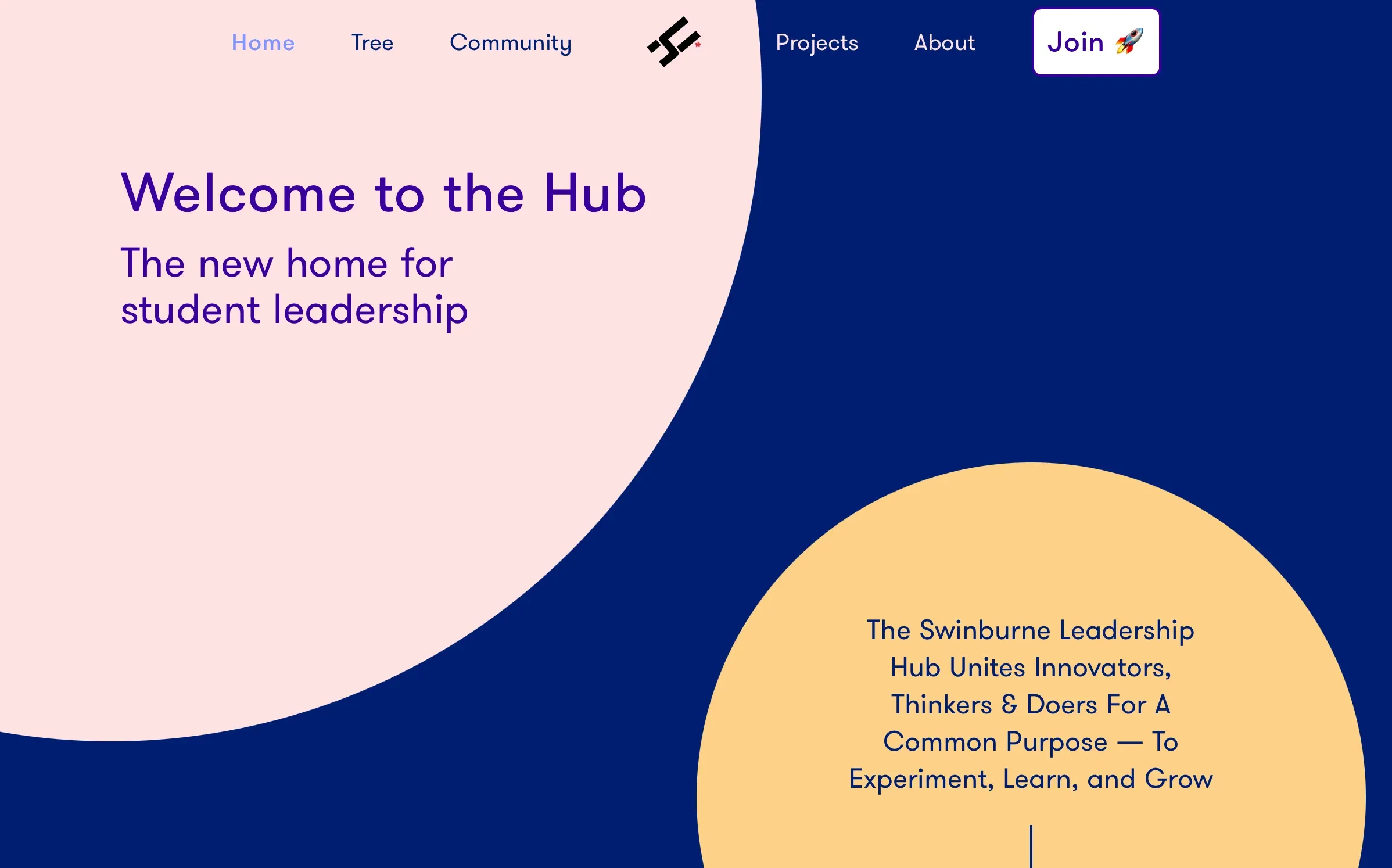
A home for leadership outside the org chart
Swin Lead—originally the Swinburne Leadership Hub—started with a coffee and a shared observation. Swinburne was full of students creating clubs, social initiatives, apps, events, and ambitious projects, but their work was scattered across courses and organisations. There was no obvious home where those leaders could find one another, share what they were learning, or invite somebody into an idea.
The initial conversation followed Chris Dilger hearing about my work on Helping Homes. Rather than treating one initiative as an isolated success story, we asked what would happen if student leaders had an ongoing place to experiment, learn, and grow together.
What the Hub became
The website acted as the front door, not the community itself. It made leadership work visible and connected students to several ways of participating:
- stories about student projects and the people behind them;
- a directory of initiatives looking for attention or collaborators;
- events, workshops, resources, and development opportunities;
- a community space where members could share progress and ask for help; and
- a more inclusive view of leadership than titles, committees, and formal programs alone.
The Hub also created its own community rituals. Beans with Leadership, a short podcast series, let students and staff talk honestly about failure, growth, and the experiences that shaped them. The 2021 Leadathon brought strangers together for a 24-hour leadership hackathon, moving from a difficult problem to a pitched response with mentors and peers around them.
My contribution
I helped shape the original proposition, early community model, and product experience. My contribution sat between technology and culture: making the platform useful enough to bring people in while helping establish the language and activities that gave them a reason to stay.
That included sharing my own leadership experience in workshops, helping student projects become visible, and contributing to the web platform as the Hub evolved beyond its first version.
Building a platform others could own
The later public implementation used an Astro frontend deployed through Vercel with WordPress on AWS Lightsail as the content backend. The repository documented a collaborative Git workflow, preview deployments for non-technical feedback, a changelog, and contribution guidance so the site could remain a team project rather than one developer’s codebase.
Those choices reflected the product’s purpose. A student community changes as people graduate. Its systems need to make handover, contribution, and shared ownership normal rather than exceptional.
What I learned
Swin Lead taught me that communities are not built by launching a website. They are built through repeated invitations: tell us what you are making, join this workshop, meet this person, share what failed, help with this project.
The technology matters when it makes those invitations easier to discover and act on. The real product was a stronger network between students who might otherwise have completed remarkable work without ever meeting one another.